Greenhouses in every season
Heat recovery, controlled lighting and crop production designed around each agricultural district.
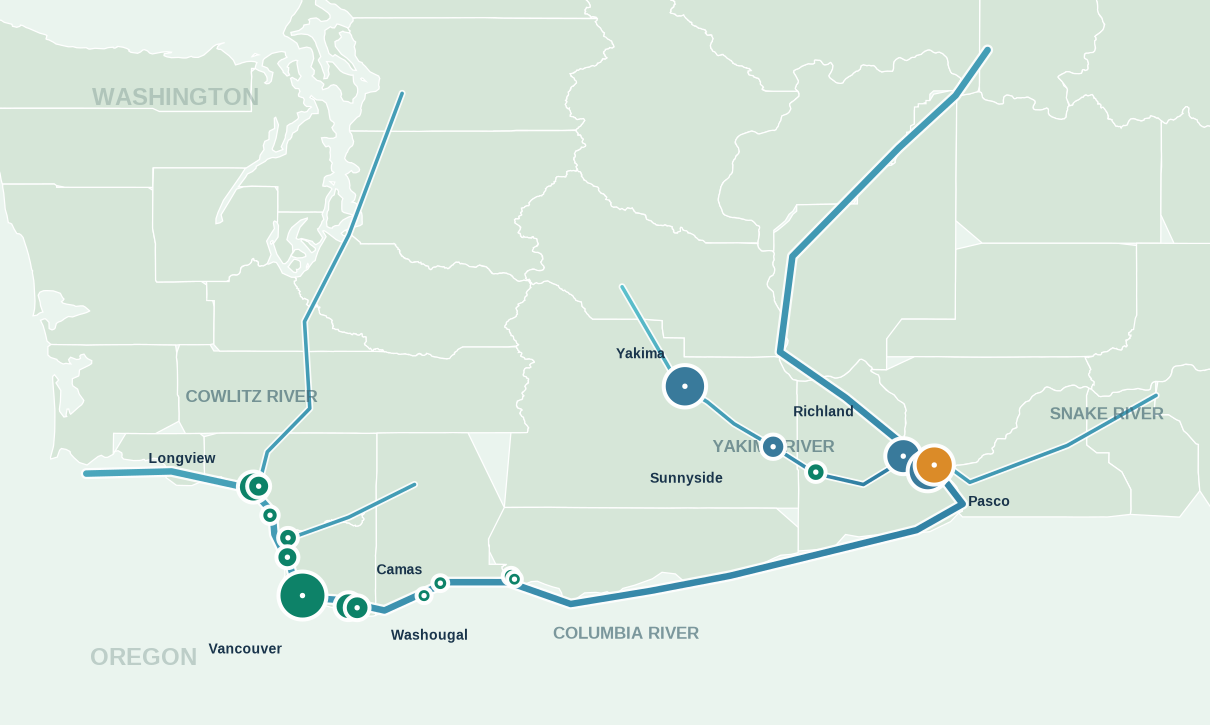
18 connected Washington communities, 2.995 GW of proposed distributed AI capacity, and a community infrastructure programme built around the Columbia and Yakima river basins.
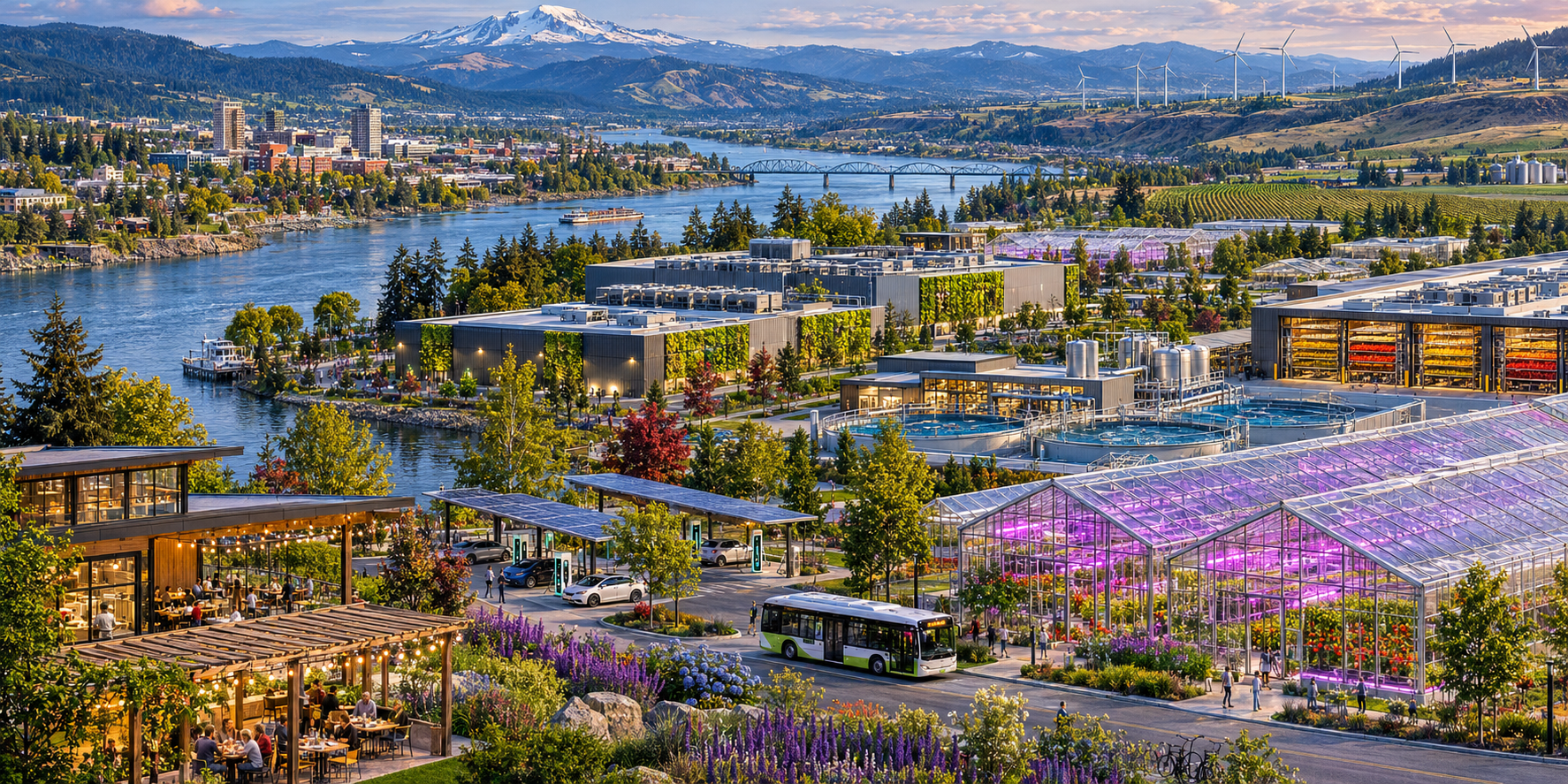
This is a geographic and community-benefit concept based on the British Columbia model, not an announced development or a 3 GW grid connection. City-centre pins are not approved parcels. Local restrictions (including Pasco) remain to be resolved.
Where AI infrastructure becomes a partner of food, water, energy and transportation.
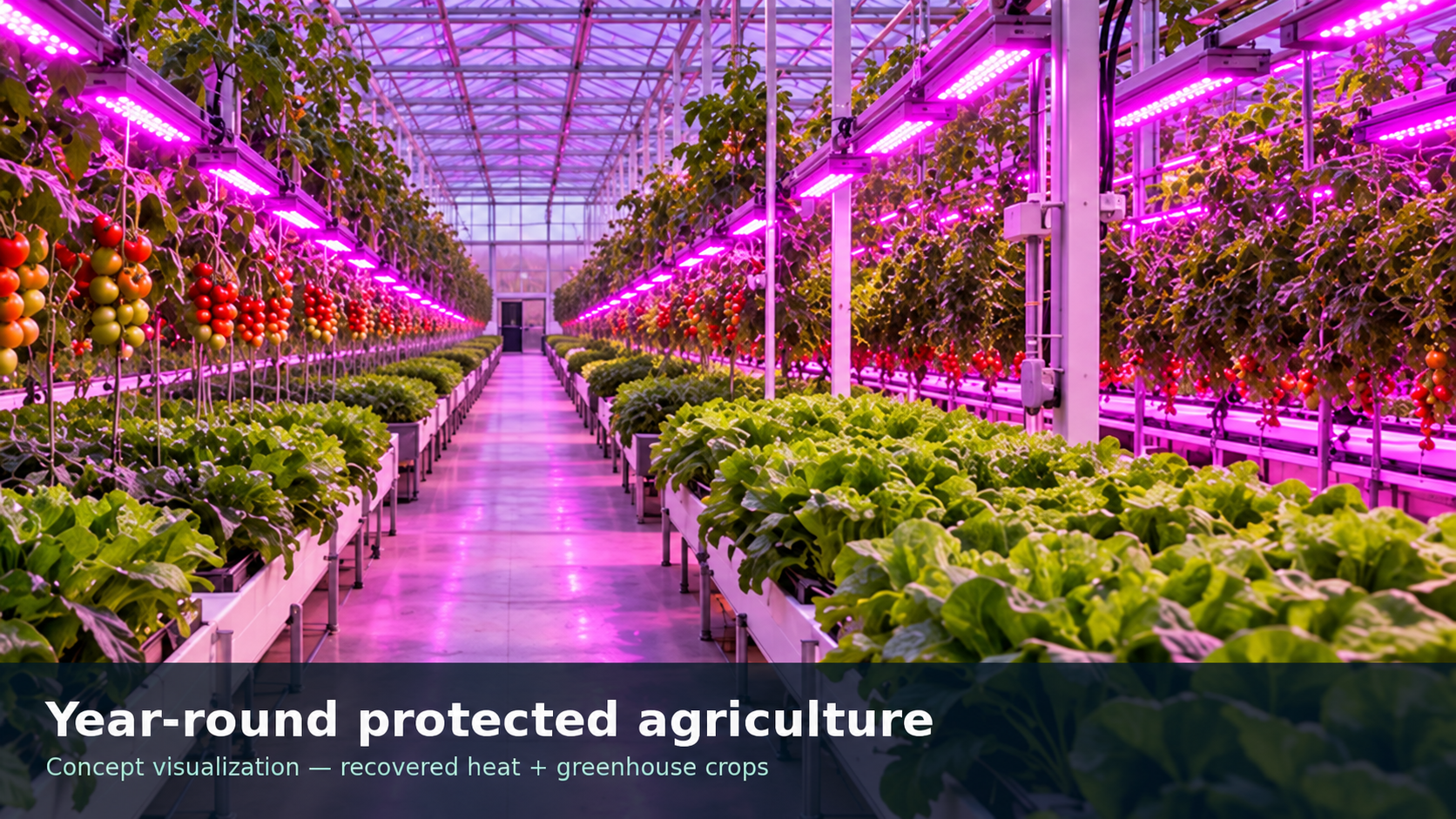
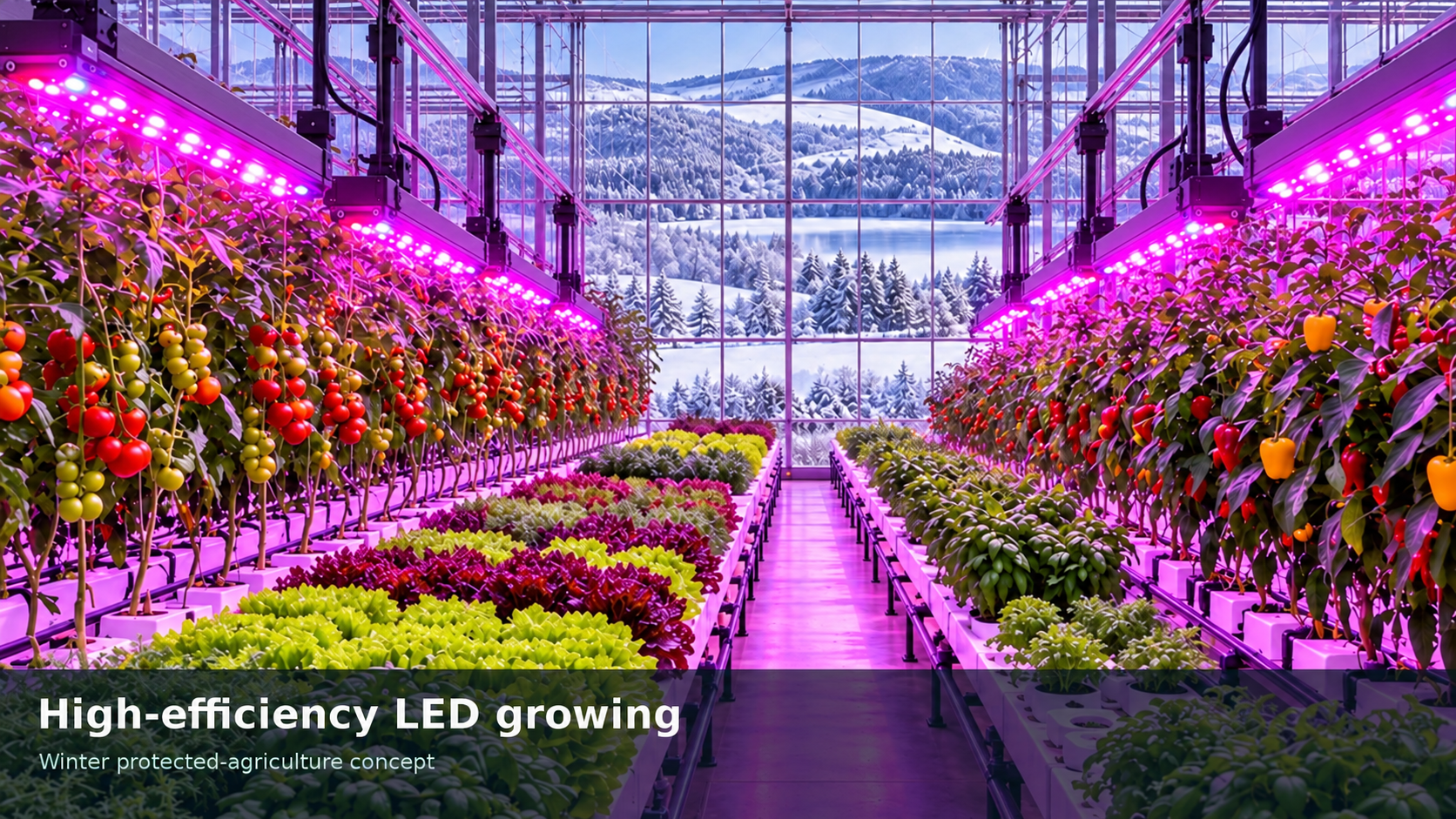
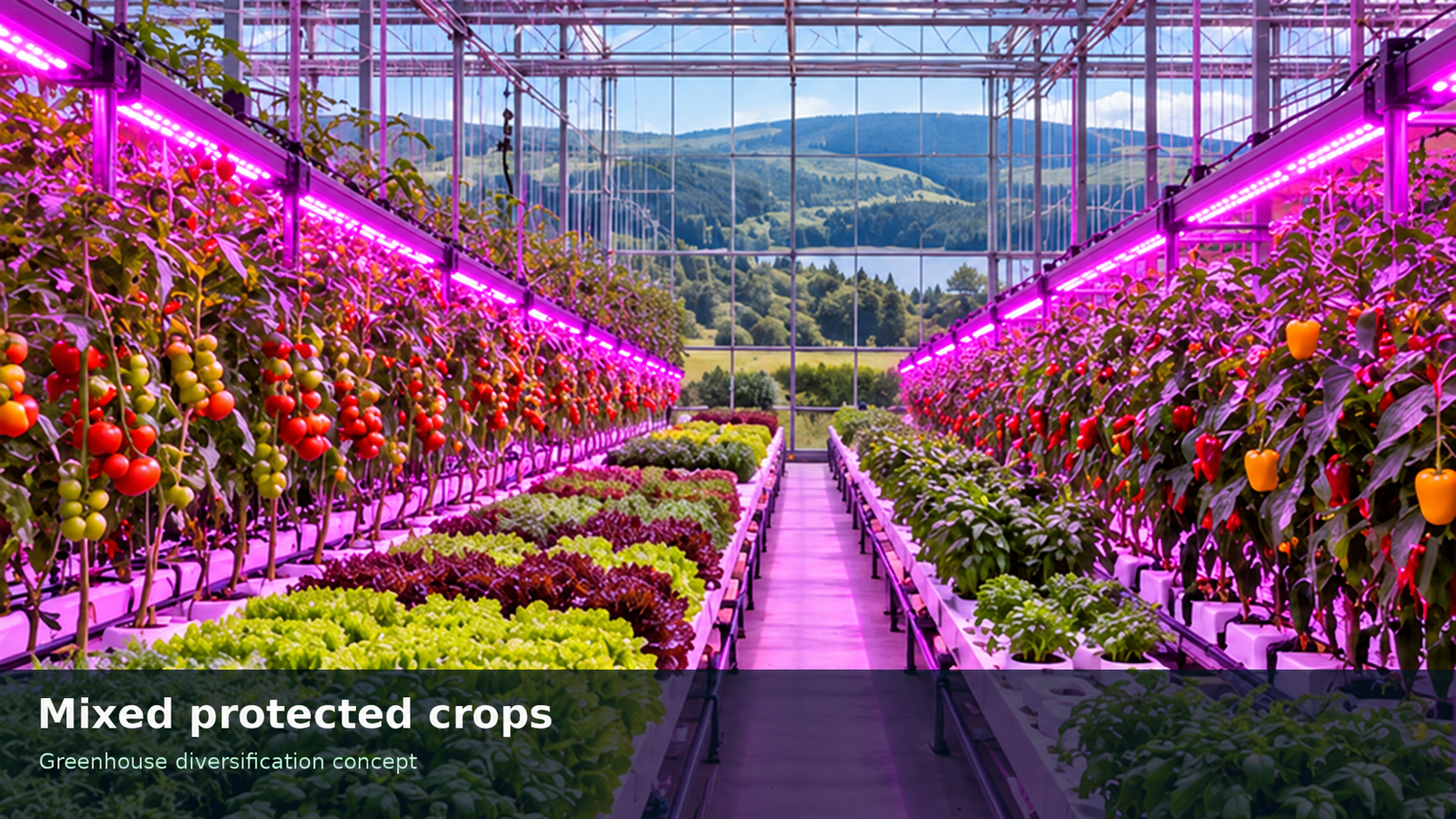
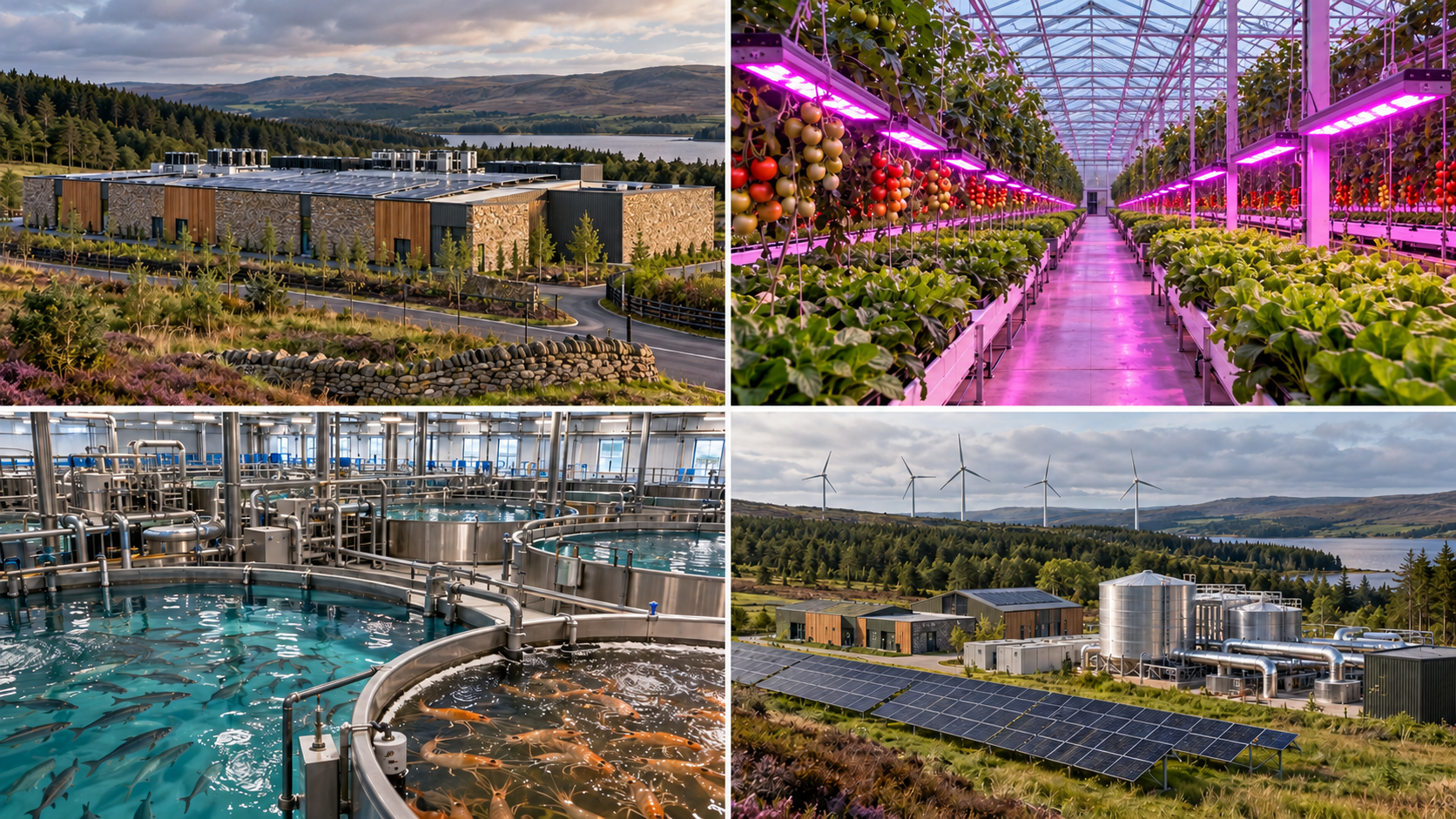
Heat recovery, controlled lighting and crop production designed around each agricultural district.
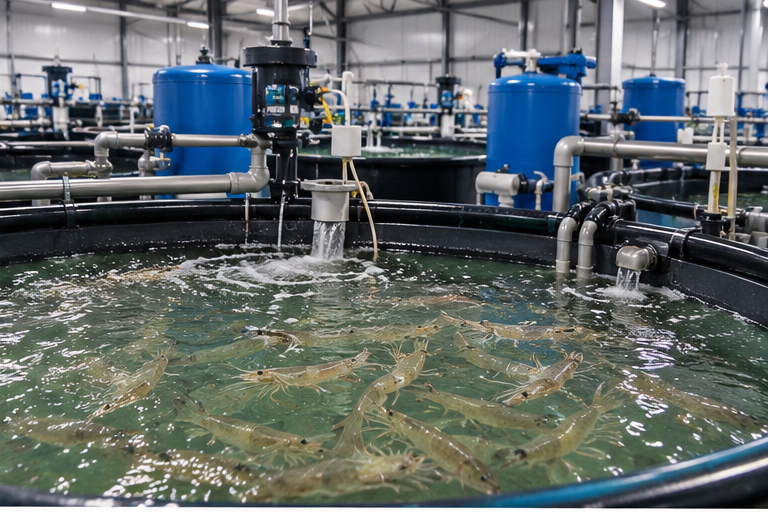
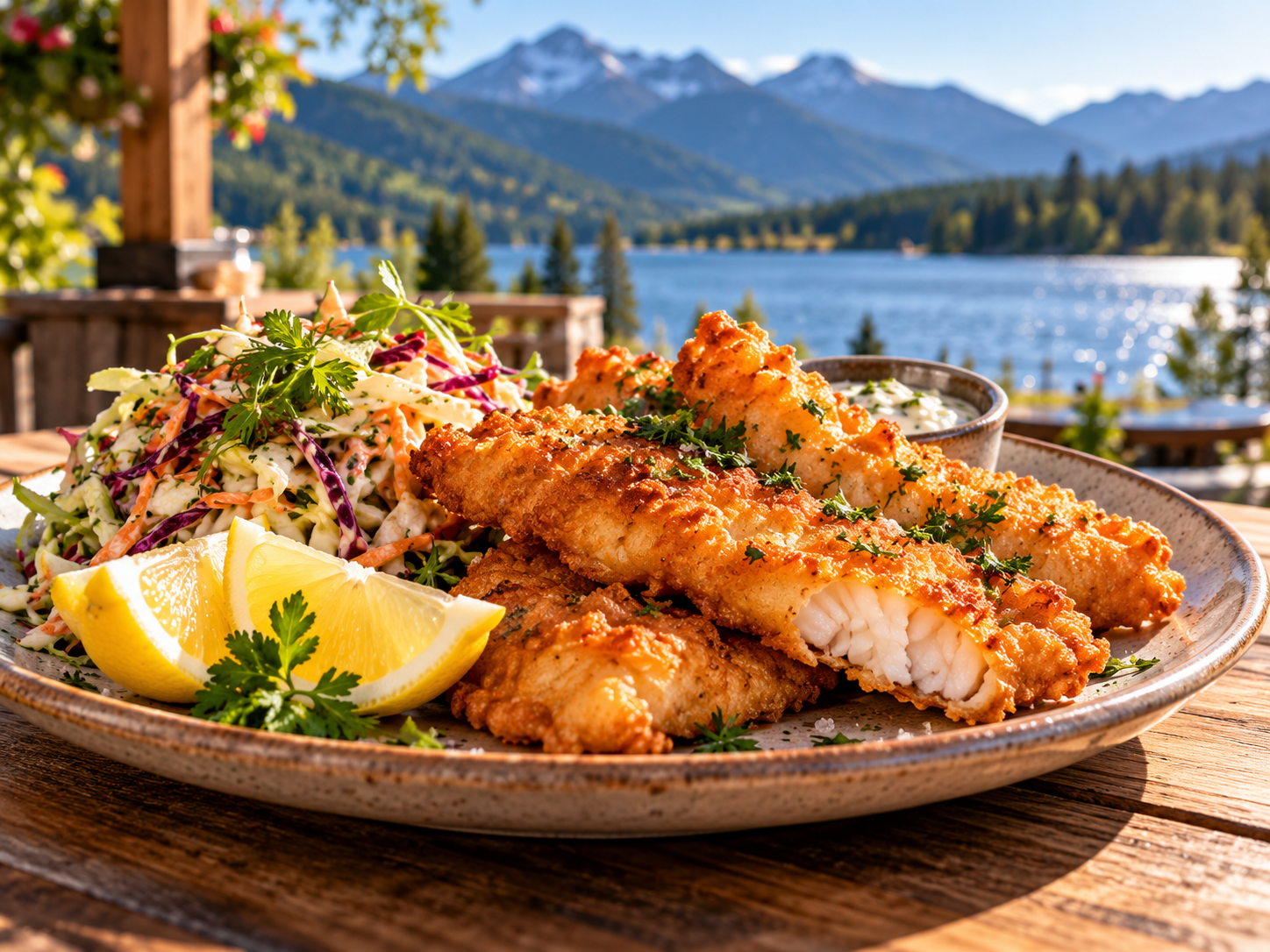
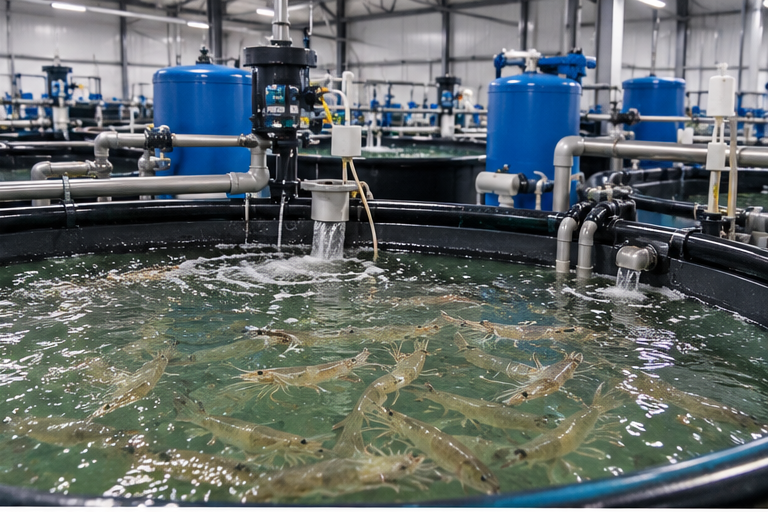
Recirculating farms proposed for inland seafood, with independent water-quality controls.
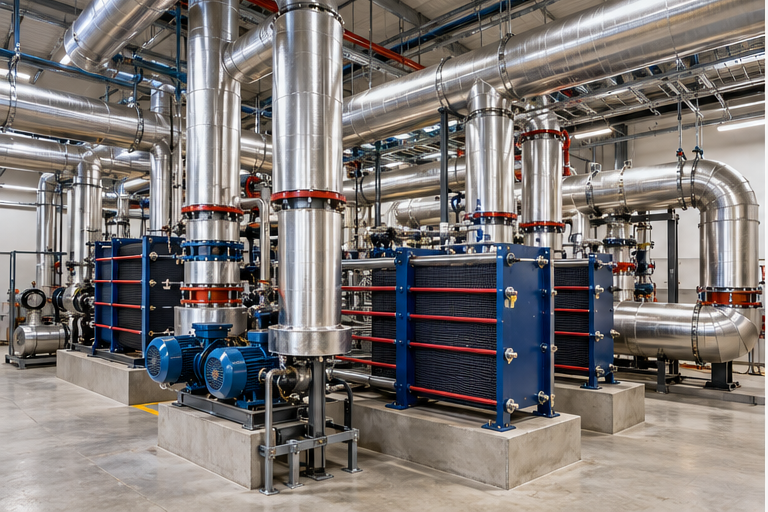
Use low-grade server heat, with heat pumps where necessary, for crops, aquaculture and community hot water.
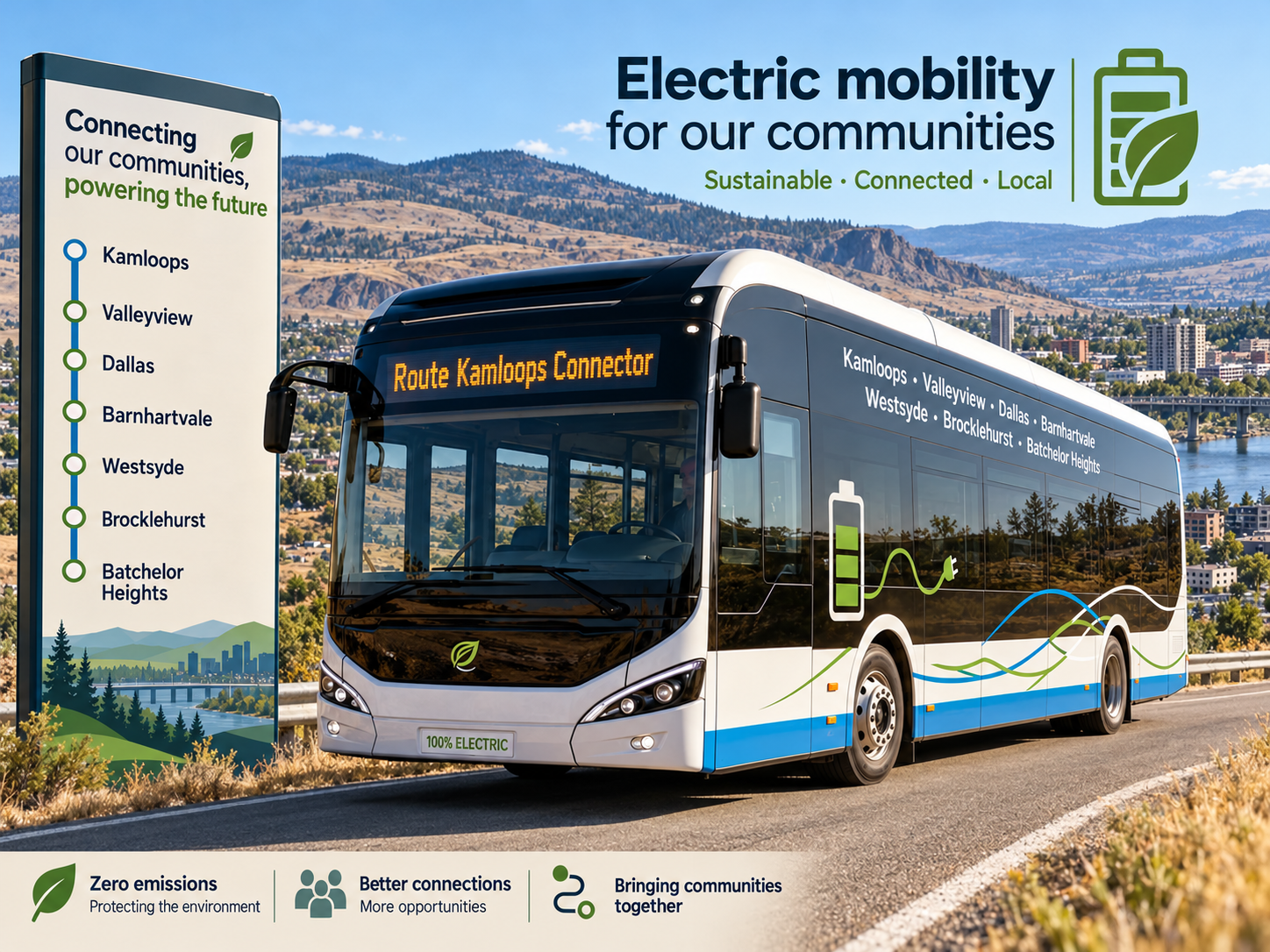
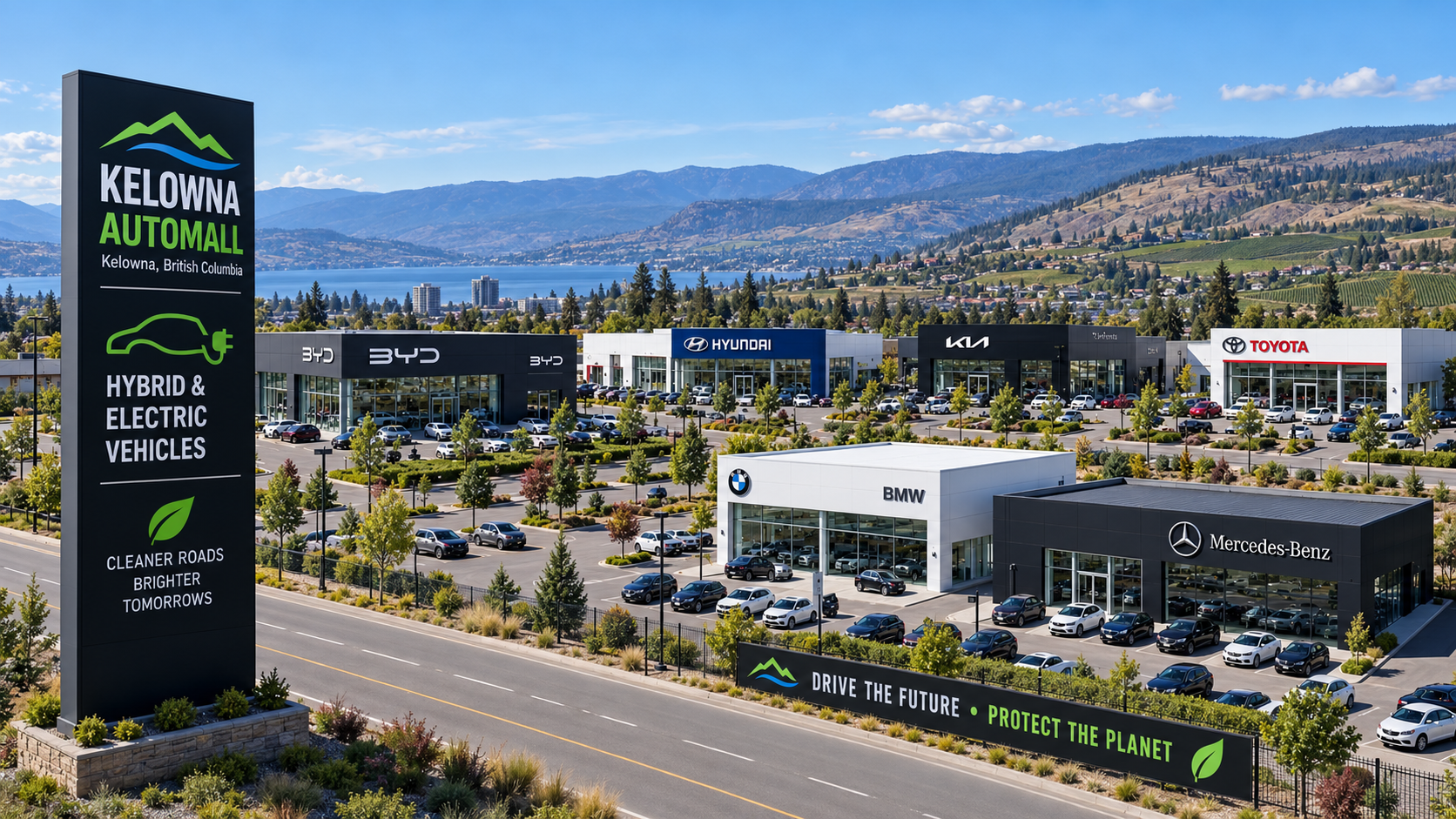
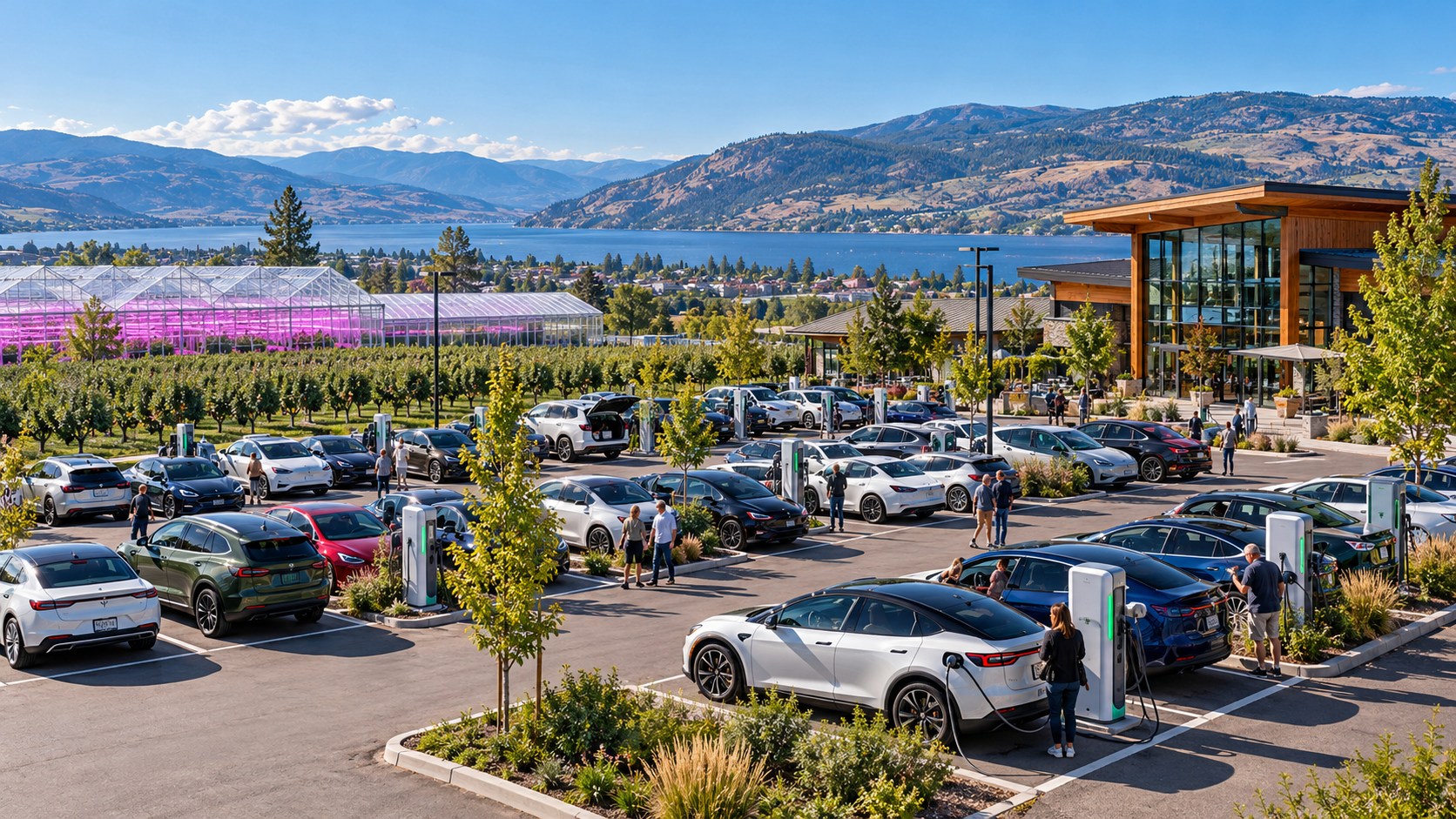
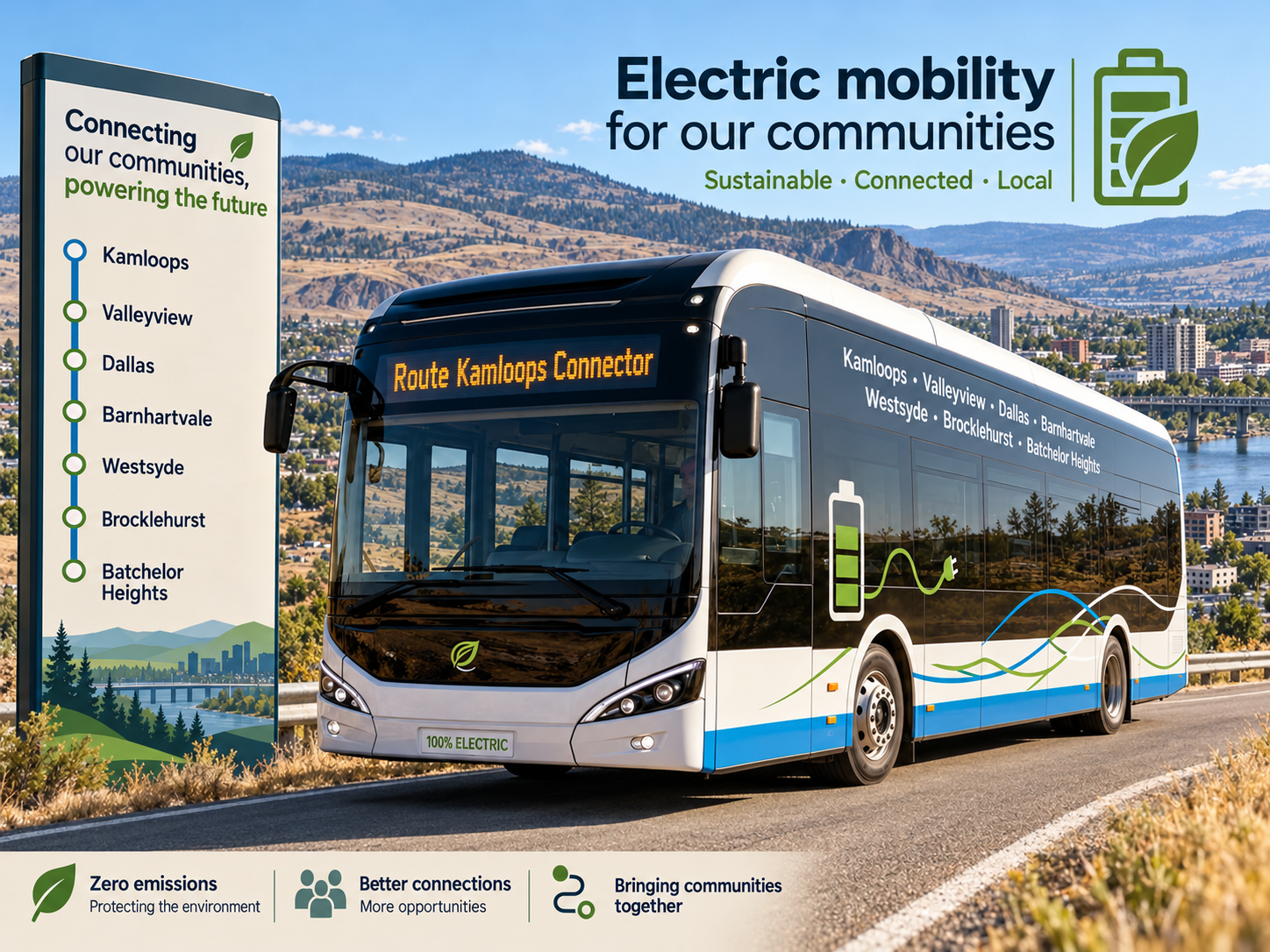
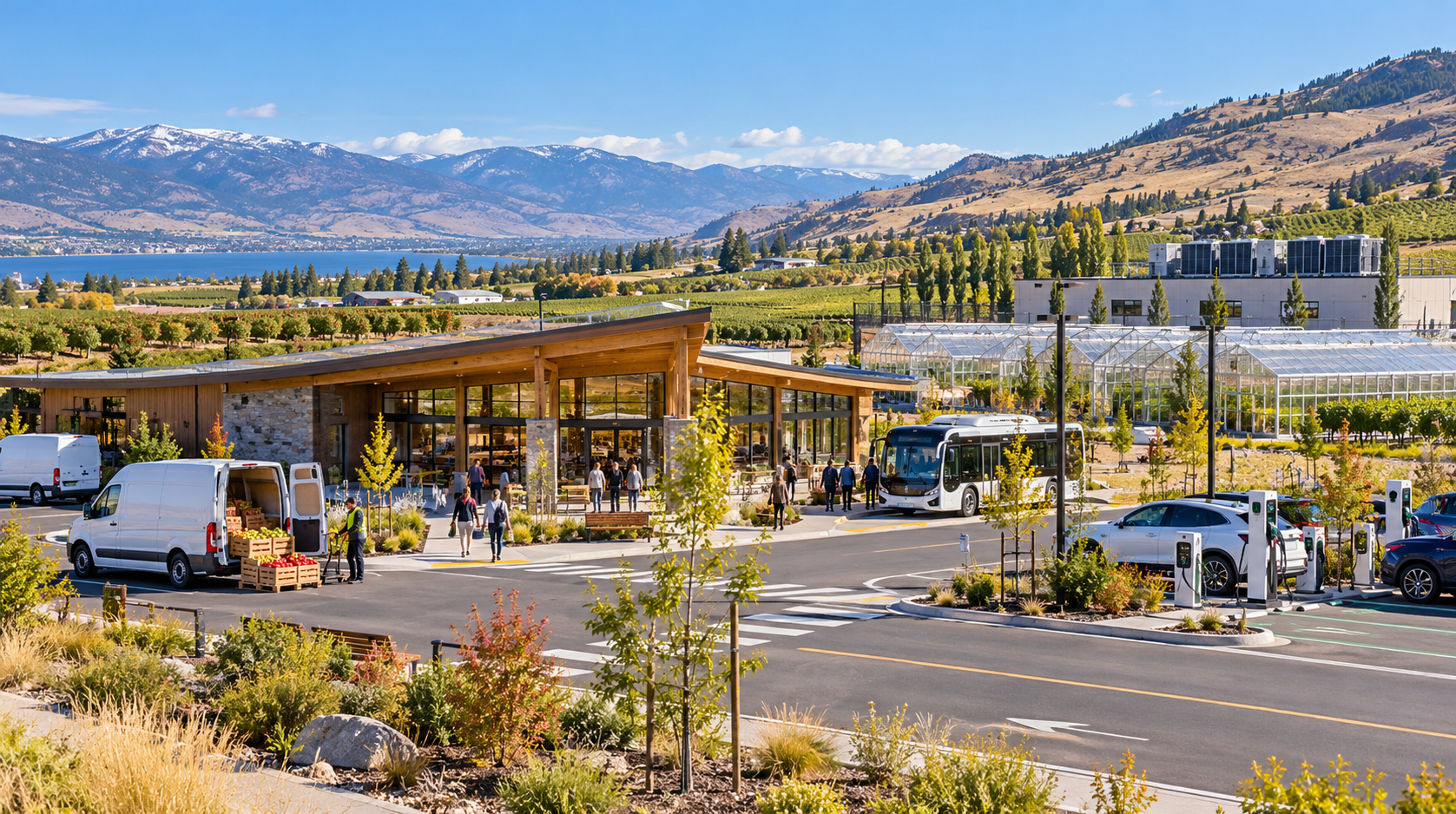
Public charging, buses, vehicle access and renewable fuels for harder-to-electrify uses.
Each node is sized from 2020 Census population. The river connections are geographic, not proposed water pipes.
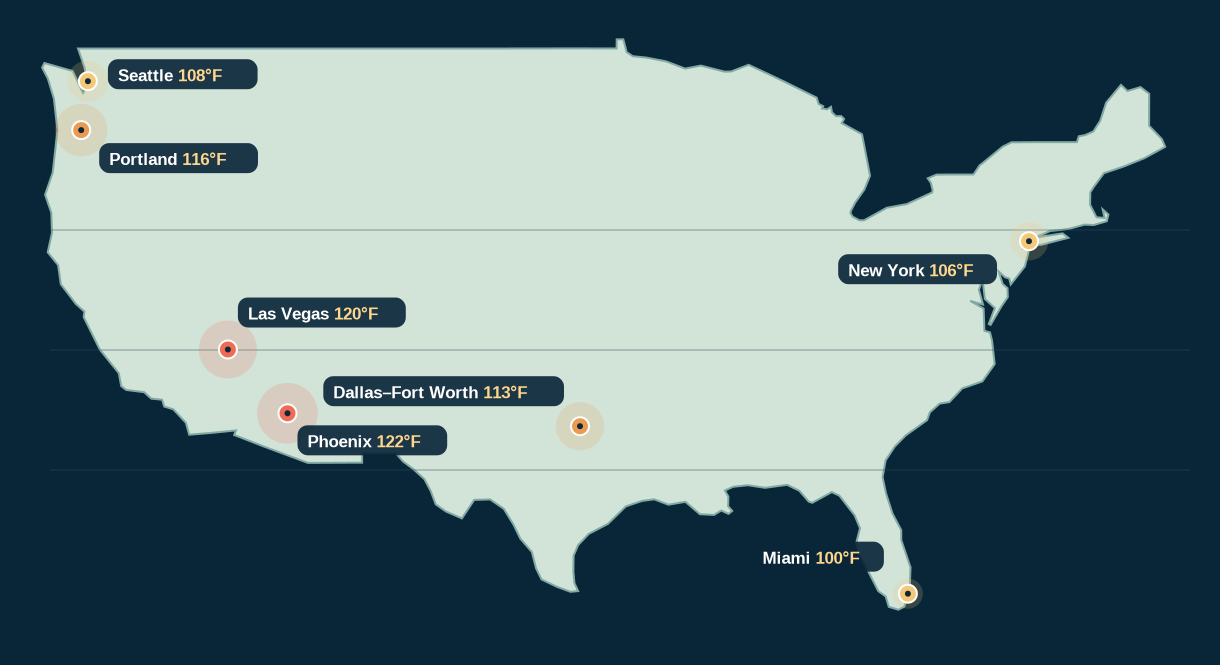
The extraordinary 2021 Pacific Northwest heatwave showed that the Columbia region is not immune to severe heat. A river-based data-centre system must be designed for heatwave water temperatures, thermal-discharge limits, flood risk and grid peaks.
The largest population anchor, with potential demand for institutional heat, mobility services and regional network operations.
A working river and industrial community with opportunities for heat-driven drying, food processing and aquaculture.
An agricultural and urban hub; unincorporated Yakima County has a temporary data-centre permitting moratorium.
The research and Columbia–Yakima river confluence anchor; permitting must be verified at parcel and utility level.
A major population and services anchor with river access, logistics and a diversified urban heat load.
A major Tri-Cities partner, but the city adopted a six-month new-data-centre moratorium on 20 July 2026.
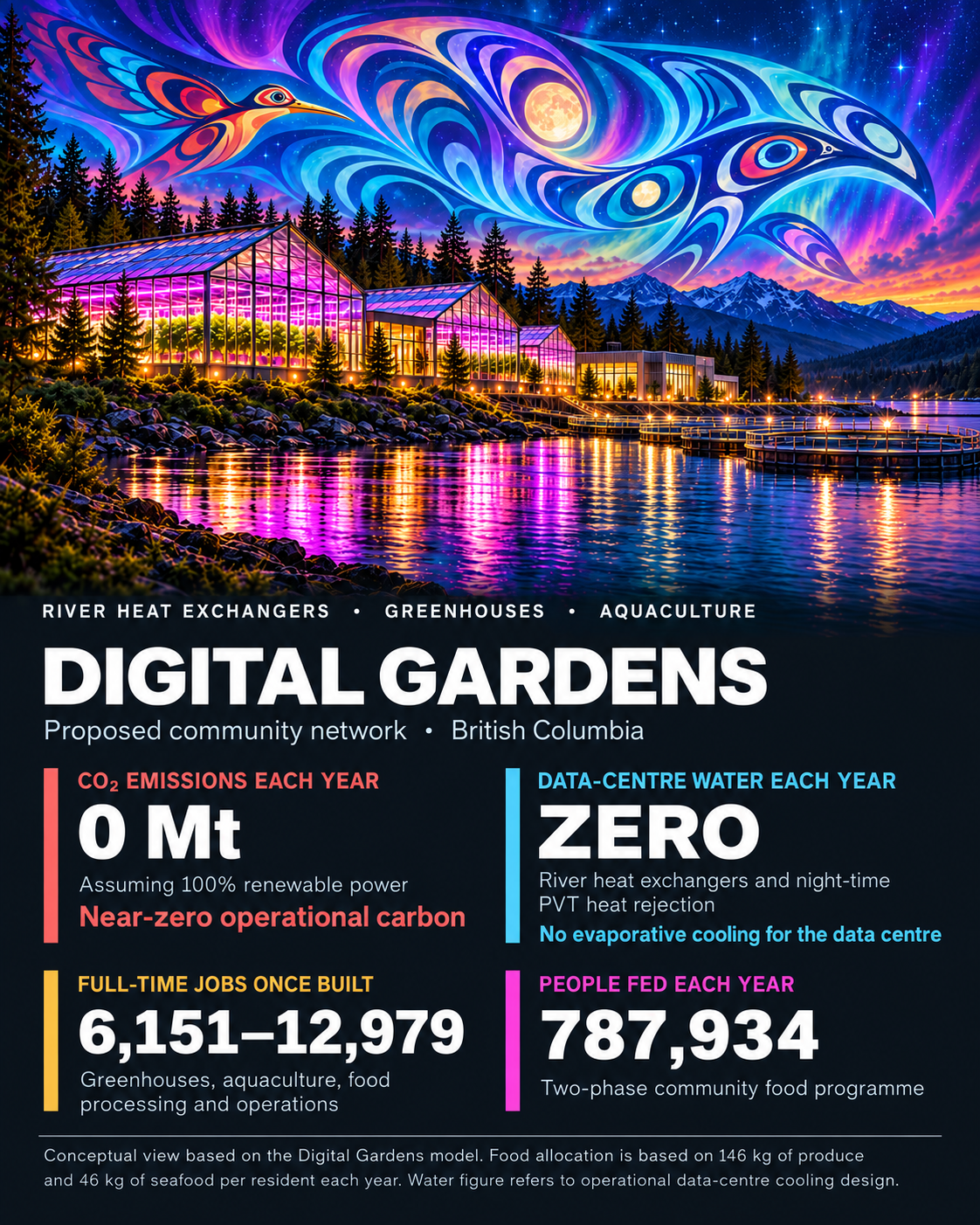
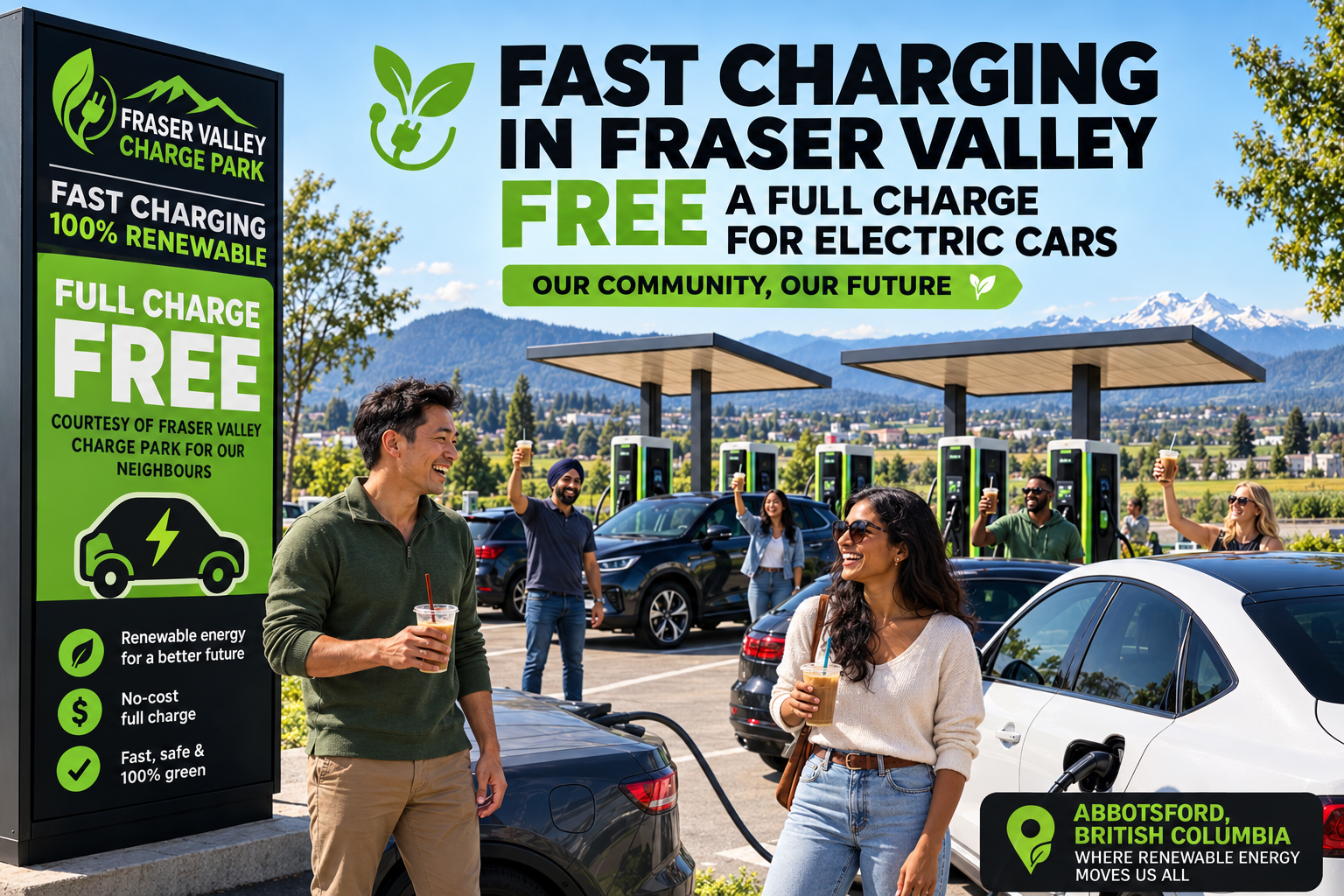
A complete Washington adaptation of the British Columbia Digital Gardens concept, with river-connected towns, local jobs, restaurant and seafood concepts, year-round produce, renewable power, heat recovery, free EV charging, renewable-fuel subsidies, free hot water, public gathering places and arts.
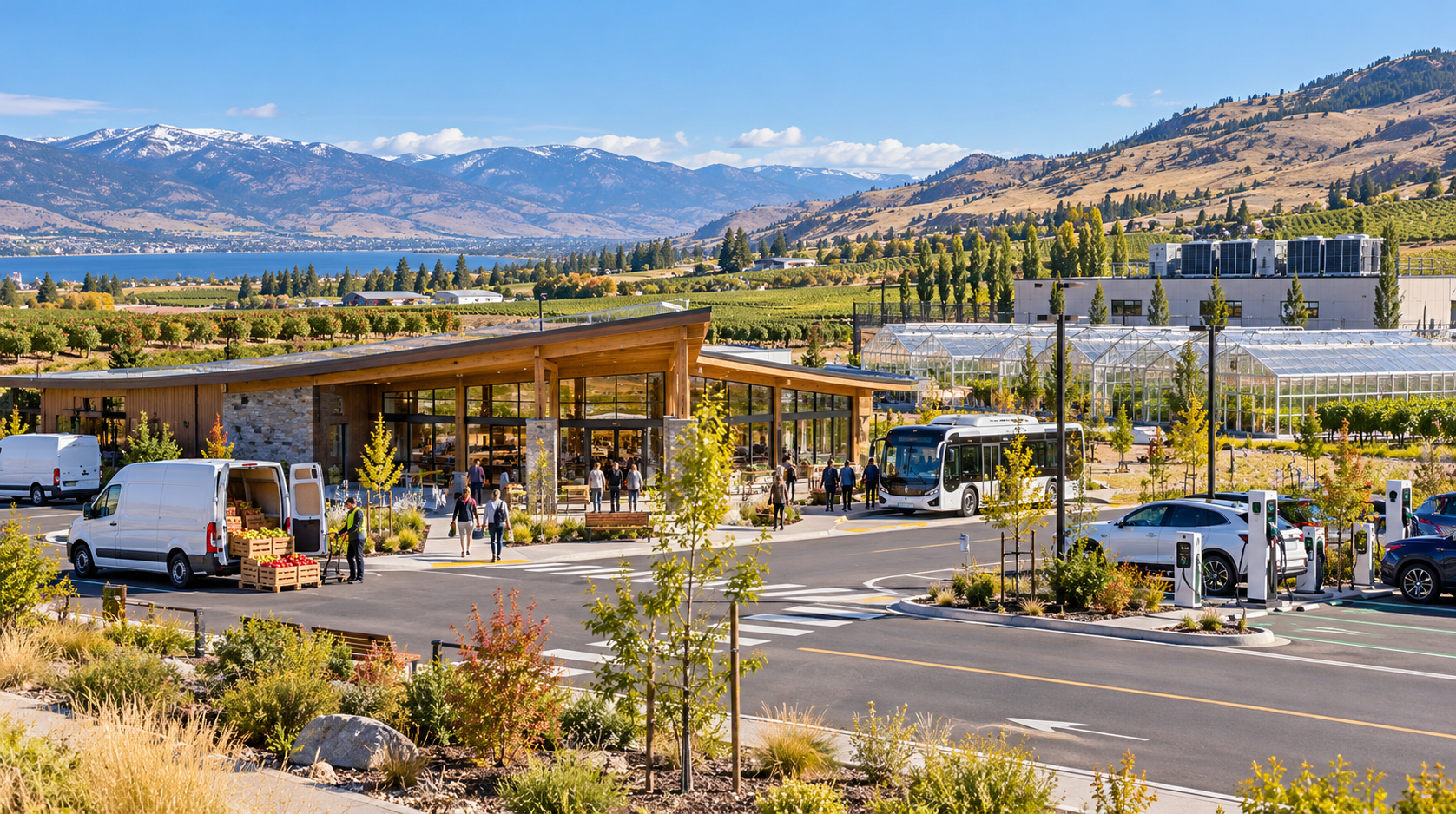
All facility images are clearly marked as ideas or British Columbia reference visuals; they do not document operational Washington facilities.
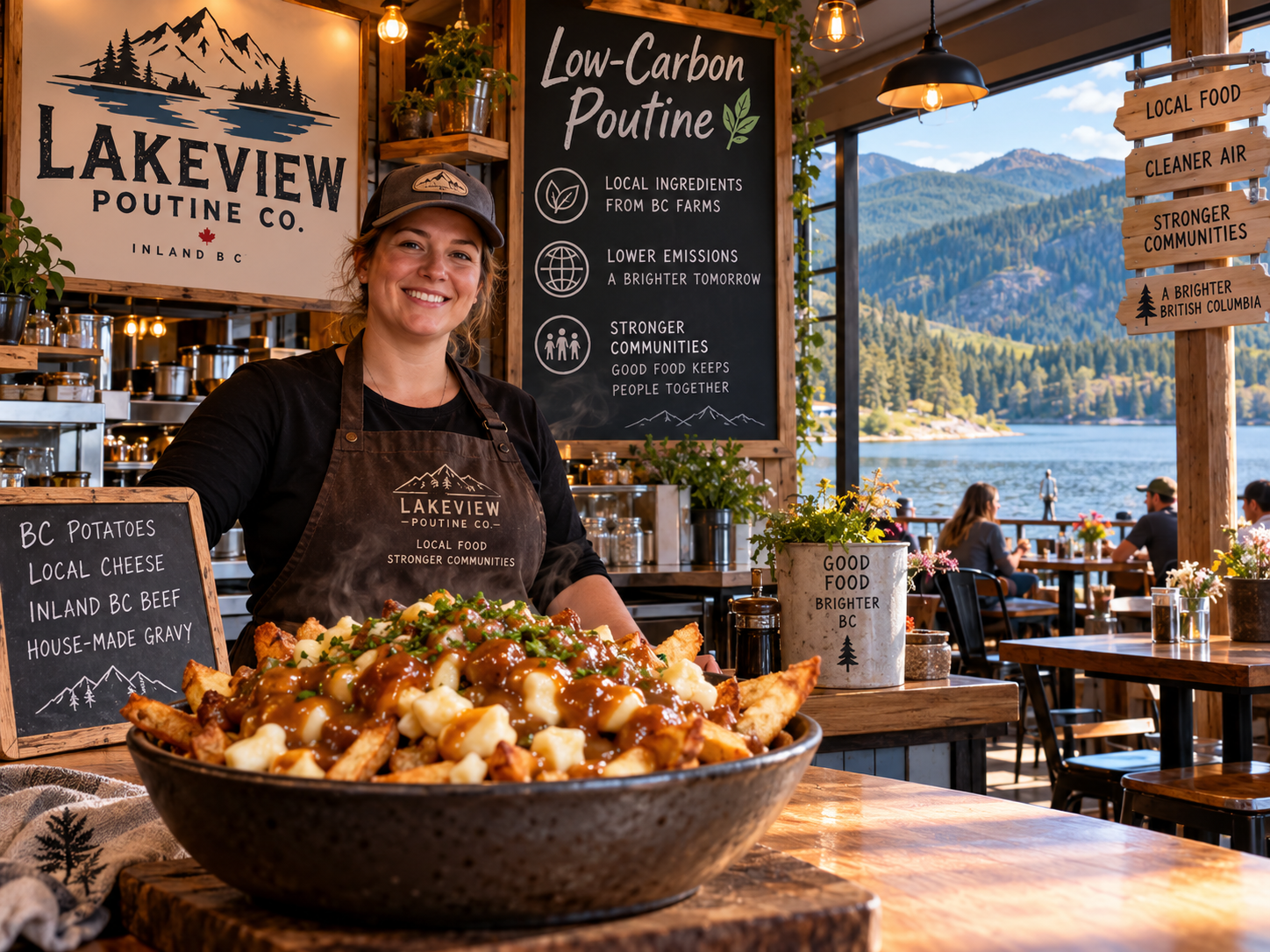
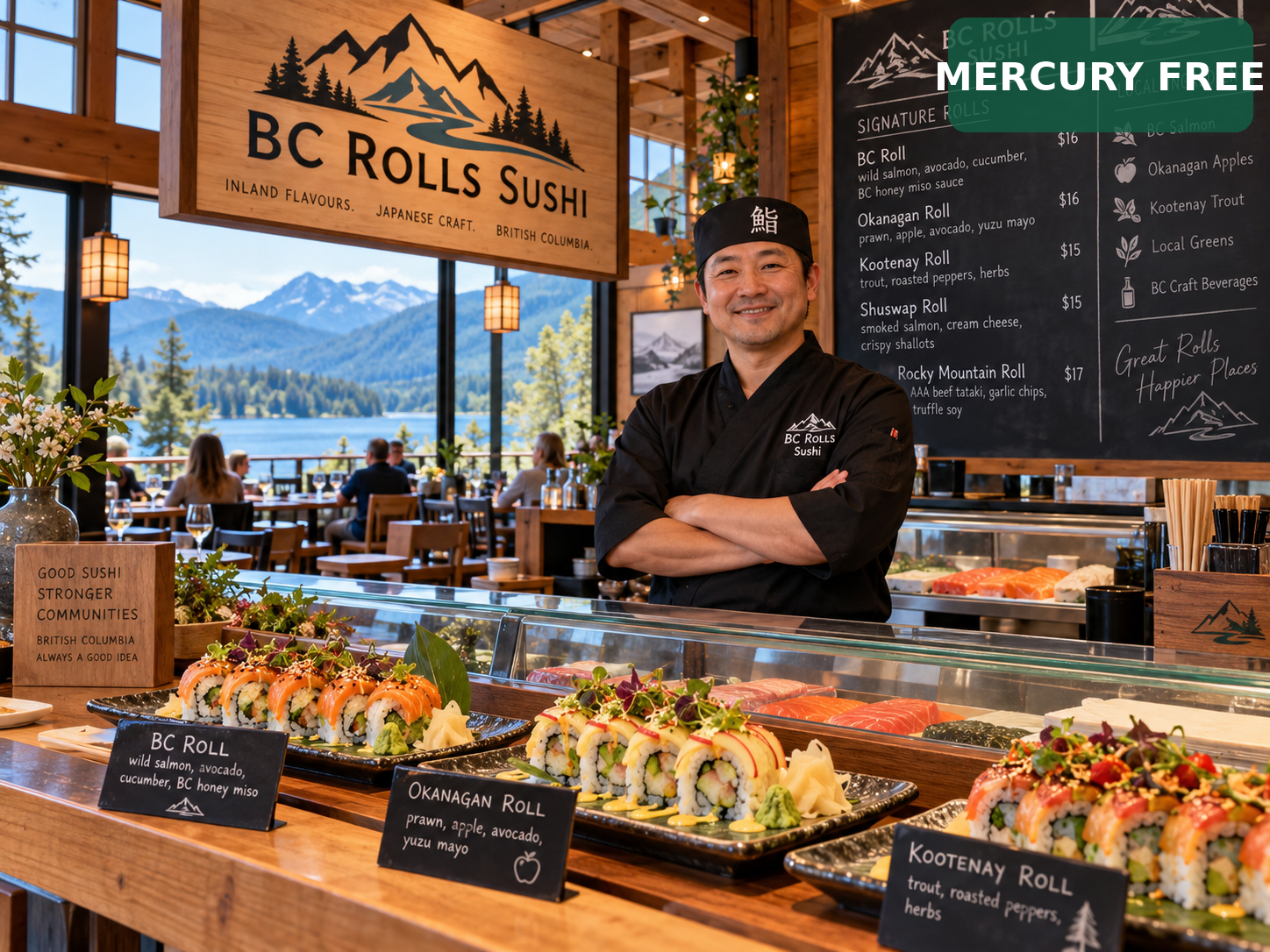
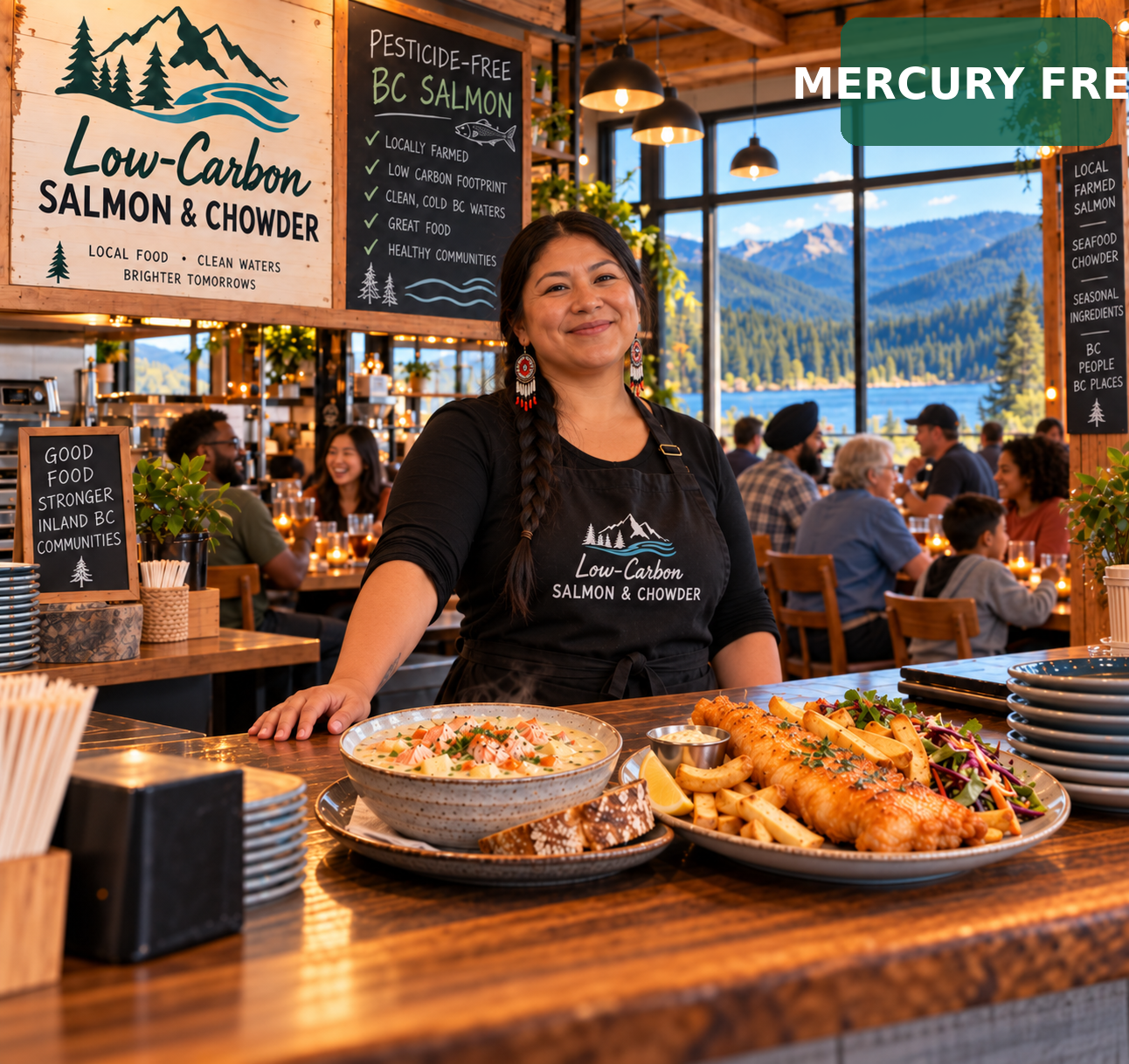
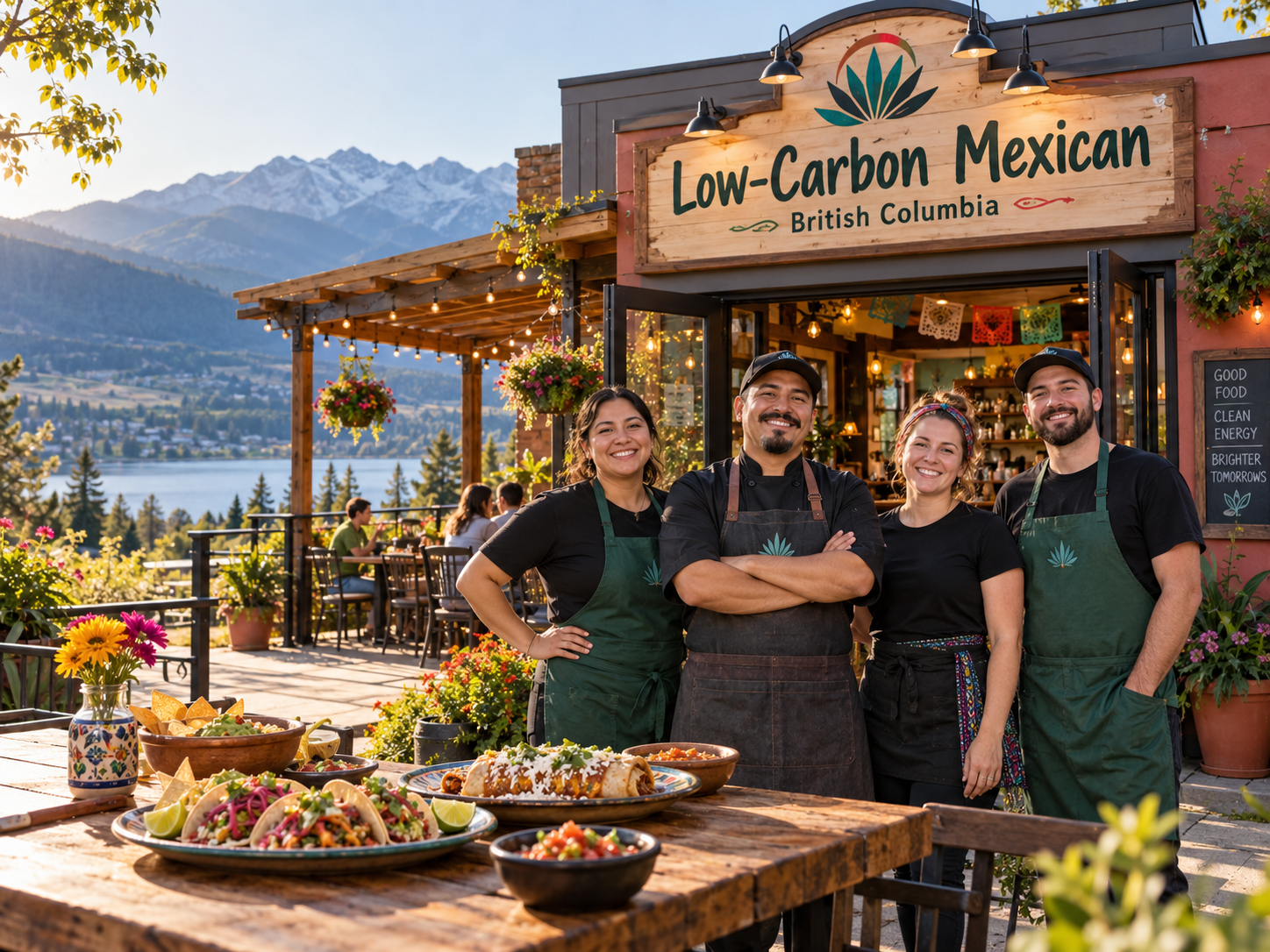
The British Columbia template used rich restaurant concepts. They are included again as design references, not claimed existing Washington businesses.
A linked heat cascade: data-centre water loops → heat exchangers → greenhouse and RAS heat → drying and local hot-water services, with feasible delivery temperatures and heat pumps where necessary.
The template includes charging hubs, visitor facilities, buses, and integrated local businesses; these remain commitments to be costed, not operating benefits.
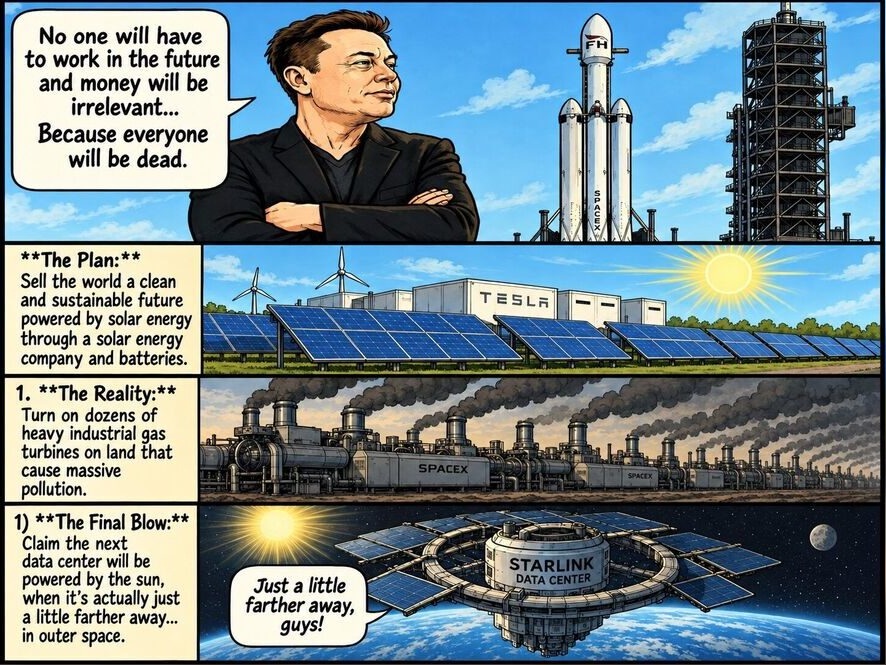
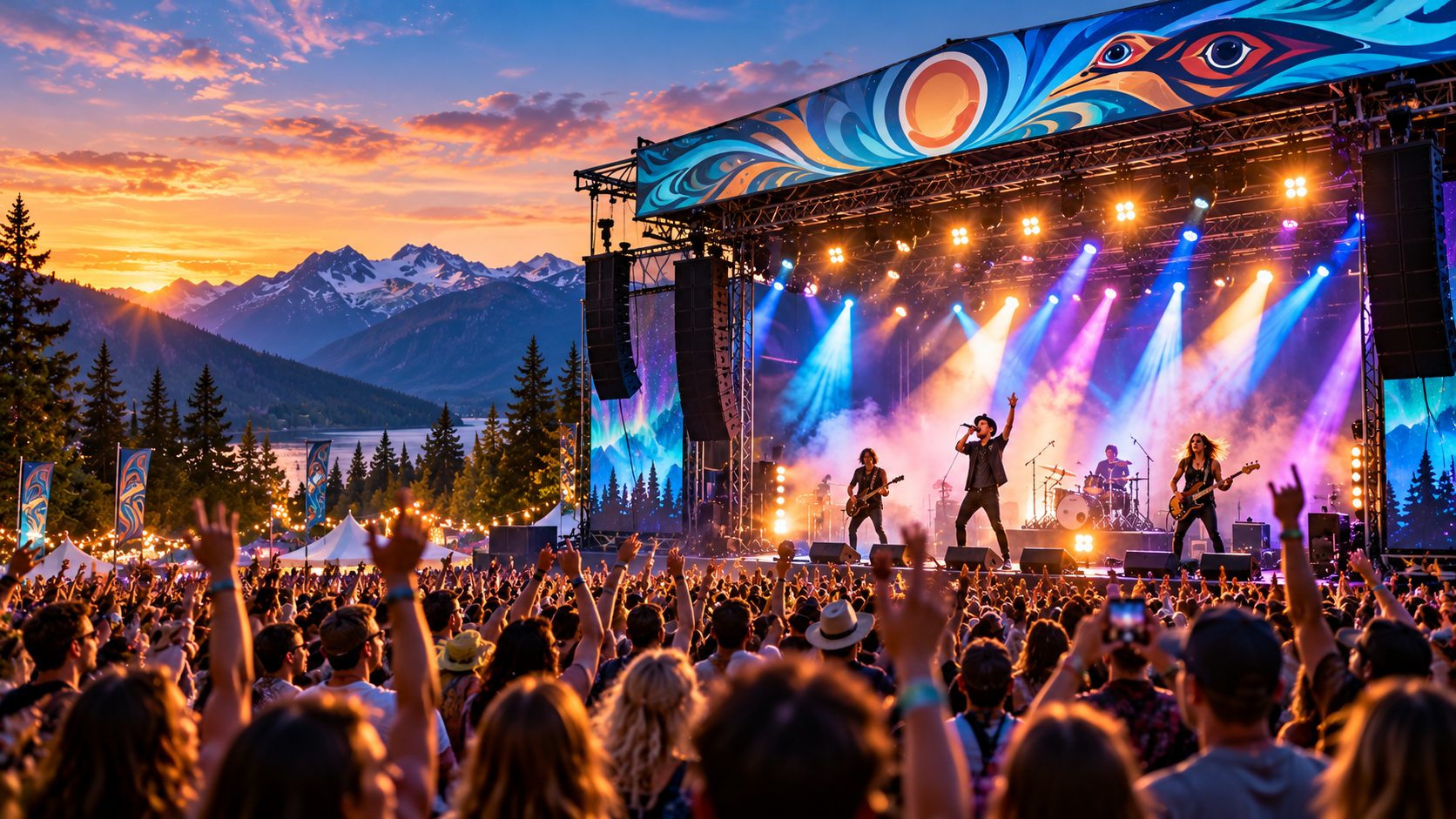
The complete visual experience includes satire and artwork, plus a proposed Columbia River festival programme.